ATP Cofactors 90Tablets
A specially formulated high potency vitamins B-2/B-3 combination containing 100mg of Riboflavin and 500mg of Niacin (as Inositol hexanicotinate) per tablet to be used as part of a complete nutritional program‚ emphasizing magnesium instead of calcium.
I. Background Information:
The unit of energy available from food is called calories. The metabolism of the macronutrients carbohydrates‚ fats‚ and proteins supply these calories. However‚ the body can not use these calories as a source of energy to perform life sustaining functions unless these calories are converted to a substance called ATP‚ which is the energy currency used by the body.
About one-half of the calories obtained from food are used to maintain body temperature and body water in a state essential for normal enzymatic activities and cell membrane fluidity. Therefore‚ 50% of the calories ingested are converted to ATP and the other half is used to pay a form to taxation in order to keep body temperature in the ideal range.
In order to convert food to ATP and use ATP as a source of energy‚ several micronutrients are required: Vitamins‚ minerals‚ and trace elements. There is a close interaction and synergism between these micronutrients. For example‚ the B-complex vitamins‚ thiamine‚ niacin‚ riboflavin and pyridoxine cannot function well without being activated by phosphorilation. This phosphorilation is magnesium dependant. Therefore‚ adequate magnesium is required to optimize the performance of the B-complex vitamins.
The synthesis of ATP by intact respiring mitochondria requires the presence of oxygen‚ magnesium‚ ADP‚ inorganic phosphate‚ and the substrates from the metabolism of carbohydrates‚ lipids‚ and aminoacids. The generation of these substrates depends on the presence of adequate amount of vitamins‚ minerals and trace elements. When all substances are presenting optimal concentrations‚ the integrity of the mitochondrial membrane and the capacity of the enzymatic system in the respiratory chain become rate limiting.
II. Rationale for the use of ATP Cofactors
As previously discussed‚ ATP is the universal currency of energy used in biological systems to maintain an organism in a state that is far from thermodynamic equilibrium with the environment‚ that is far from death. The active from of ATP is a complex of ATP with mainly magnesium‚ but also with manganese. In case of manganese deficiency‚ magnesium can replace manganese. The turnover of ATP is extremely high. For example‚ a human at rest consumes one half of his/her weight of ATP daily.
The synthesis of ATP from ADP plus high energy phosphate group is called oxidative phosphorilation and is dependant on the electron flow through the electron transport chain via electron carriers. NADH and FADH2 are the major electron carriers in the synthesis of ATP. The B vitamins‚ niacin and riboflavin‚ are the precursors of the Cofactors NADH and FADH2. These Cofactors play an important role also in the oxidation and organification of iodide by generating hydrogen peroxide via the NADPH oxydase system. In some conditions‚ the body cannot efficiently synthesized NADH and FADH3 from Niacin and Riboflavin because of defect/damage to the enzymes involved in this conversion. More Riboflavin and Niacin are needed to override the inefficient enzymes in order to obtain adequate levels of Cofactors. Evidence for a deficient organification of iodide was recently reported in a female subject with Fibromyalgia and Chronic Fatigue Preliminary results in this subject and others suggest that high dosage of vitamins B-2 and B-3 combined with 100-150mg of elemental iodine in the form of Lugol tablets resulted in a significant improvement of overall well being in these subjects.
ATP Cofactors should be used as part of a complete nutritional program emphasizing magnesium instead of calcium for best results. The manufacturer recommends the following multivitamin-mineral combinations:
For pre-menopausal women = Optivite PMT®
For post menopausal women = Gynovite Plus®
For men = Androvite®
Extra magnesium may be ingested using the magnesium supplement Mag-200®
These statements have not been evaluated by the Food and Drug Administration (FDA). These products are not meant to diagnose‚ treat or cure any disease or medical condition. Please consult your doctor before starting any exercise or nutritional supplement program or before using these or any product during pregnancy or if you have a serious medical condition.
Official Website: http://www.optimox.com
Original: $34.99
-65%$34.99
$12.25More Images


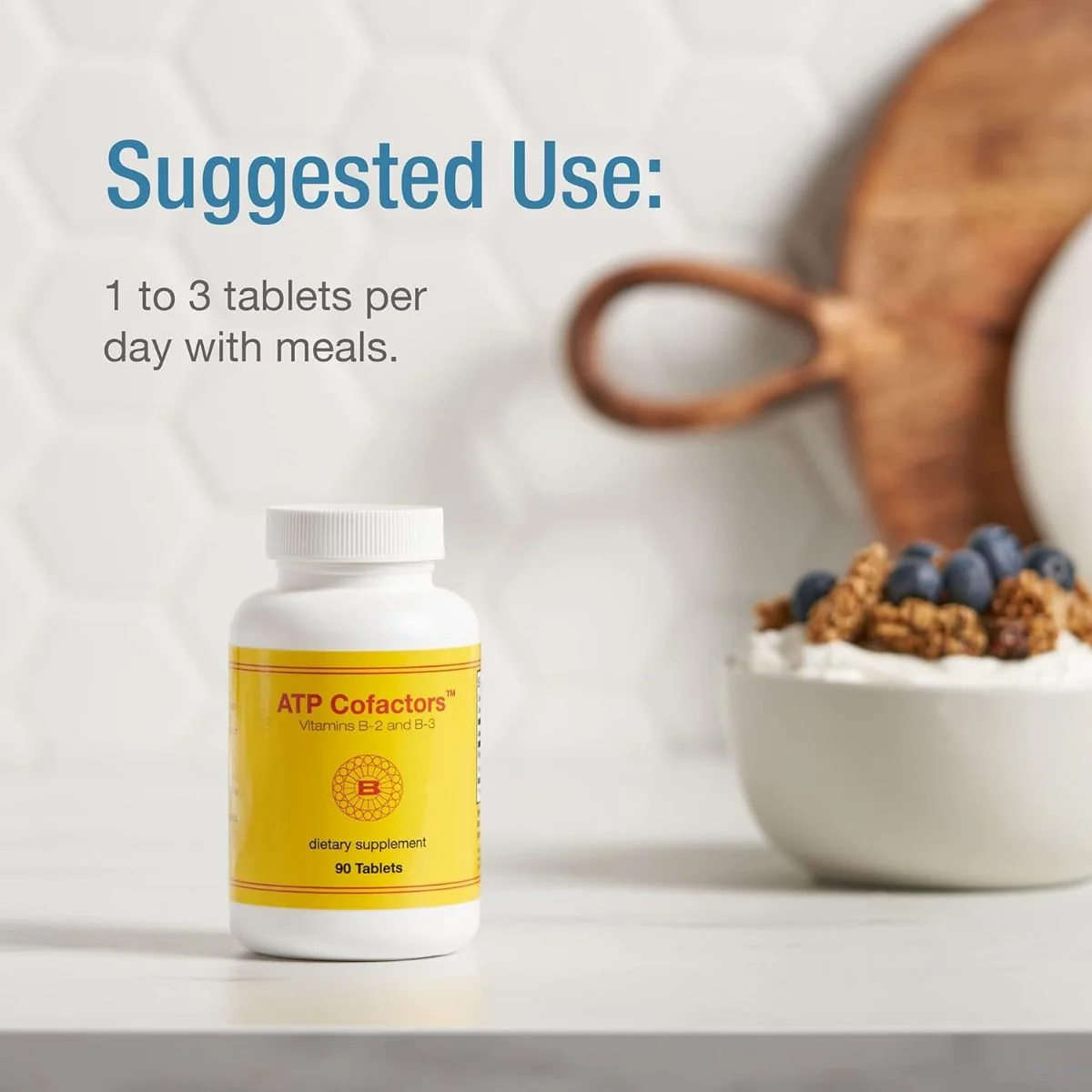


ATP Cofactors 90Tablets
A specially formulated high potency vitamins B-2/B-3 combination containing 100mg of Riboflavin and 500mg of Niacin (as Inositol hexanicotinate) per tablet to be used as part of a complete nutritional program‚ emphasizing magnesium instead of calcium.
I. Background Information:
The unit of energy available from food is called calories. The metabolism of the macronutrients carbohydrates‚ fats‚ and proteins supply these calories. However‚ the body can not use these calories as a source of energy to perform life sustaining functions unless these calories are converted to a substance called ATP‚ which is the energy currency used by the body.
About one-half of the calories obtained from food are used to maintain body temperature and body water in a state essential for normal enzymatic activities and cell membrane fluidity. Therefore‚ 50% of the calories ingested are converted to ATP and the other half is used to pay a form to taxation in order to keep body temperature in the ideal range.
In order to convert food to ATP and use ATP as a source of energy‚ several micronutrients are required: Vitamins‚ minerals‚ and trace elements. There is a close interaction and synergism between these micronutrients. For example‚ the B-complex vitamins‚ thiamine‚ niacin‚ riboflavin and pyridoxine cannot function well without being activated by phosphorilation. This phosphorilation is magnesium dependant. Therefore‚ adequate magnesium is required to optimize the performance of the B-complex vitamins.
The synthesis of ATP by intact respiring mitochondria requires the presence of oxygen‚ magnesium‚ ADP‚ inorganic phosphate‚ and the substrates from the metabolism of carbohydrates‚ lipids‚ and aminoacids. The generation of these substrates depends on the presence of adequate amount of vitamins‚ minerals and trace elements. When all substances are presenting optimal concentrations‚ the integrity of the mitochondrial membrane and the capacity of the enzymatic system in the respiratory chain become rate limiting.
II. Rationale for the use of ATP Cofactors
As previously discussed‚ ATP is the universal currency of energy used in biological systems to maintain an organism in a state that is far from thermodynamic equilibrium with the environment‚ that is far from death. The active from of ATP is a complex of ATP with mainly magnesium‚ but also with manganese. In case of manganese deficiency‚ magnesium can replace manganese. The turnover of ATP is extremely high. For example‚ a human at rest consumes one half of his/her weight of ATP daily.
The synthesis of ATP from ADP plus high energy phosphate group is called oxidative phosphorilation and is dependant on the electron flow through the electron transport chain via electron carriers. NADH and FADH2 are the major electron carriers in the synthesis of ATP. The B vitamins‚ niacin and riboflavin‚ are the precursors of the Cofactors NADH and FADH2. These Cofactors play an important role also in the oxidation and organification of iodide by generating hydrogen peroxide via the NADPH oxydase system. In some conditions‚ the body cannot efficiently synthesized NADH and FADH3 from Niacin and Riboflavin because of defect/damage to the enzymes involved in this conversion. More Riboflavin and Niacin are needed to override the inefficient enzymes in order to obtain adequate levels of Cofactors. Evidence for a deficient organification of iodide was recently reported in a female subject with Fibromyalgia and Chronic Fatigue Preliminary results in this subject and others suggest that high dosage of vitamins B-2 and B-3 combined with 100-150mg of elemental iodine in the form of Lugol tablets resulted in a significant improvement of overall well being in these subjects.
ATP Cofactors should be used as part of a complete nutritional program emphasizing magnesium instead of calcium for best results. The manufacturer recommends the following multivitamin-mineral combinations:
For pre-menopausal women = Optivite PMT®
For post menopausal women = Gynovite Plus®
For men = Androvite®
Extra magnesium may be ingested using the magnesium supplement Mag-200®
These statements have not been evaluated by the Food and Drug Administration (FDA). These products are not meant to diagnose‚ treat or cure any disease or medical condition. Please consult your doctor before starting any exercise or nutritional supplement program or before using these or any product during pregnancy or if you have a serious medical condition.
Official Website: http://www.optimox.com
Product Information
Product Information
Shipping & Returns
Shipping & Returns
Description
A specially formulated high potency vitamins B-2/B-3 combination containing 100mg of Riboflavin and 500mg of Niacin (as Inositol hexanicotinate) per tablet to be used as part of a complete nutritional program‚ emphasizing magnesium instead of calcium.
I. Background Information:
The unit of energy available from food is called calories. The metabolism of the macronutrients carbohydrates‚ fats‚ and proteins supply these calories. However‚ the body can not use these calories as a source of energy to perform life sustaining functions unless these calories are converted to a substance called ATP‚ which is the energy currency used by the body.
About one-half of the calories obtained from food are used to maintain body temperature and body water in a state essential for normal enzymatic activities and cell membrane fluidity. Therefore‚ 50% of the calories ingested are converted to ATP and the other half is used to pay a form to taxation in order to keep body temperature in the ideal range.
In order to convert food to ATP and use ATP as a source of energy‚ several micronutrients are required: Vitamins‚ minerals‚ and trace elements. There is a close interaction and synergism between these micronutrients. For example‚ the B-complex vitamins‚ thiamine‚ niacin‚ riboflavin and pyridoxine cannot function well without being activated by phosphorilation. This phosphorilation is magnesium dependant. Therefore‚ adequate magnesium is required to optimize the performance of the B-complex vitamins.
The synthesis of ATP by intact respiring mitochondria requires the presence of oxygen‚ magnesium‚ ADP‚ inorganic phosphate‚ and the substrates from the metabolism of carbohydrates‚ lipids‚ and aminoacids. The generation of these substrates depends on the presence of adequate amount of vitamins‚ minerals and trace elements. When all substances are presenting optimal concentrations‚ the integrity of the mitochondrial membrane and the capacity of the enzymatic system in the respiratory chain become rate limiting.
II. Rationale for the use of ATP Cofactors
As previously discussed‚ ATP is the universal currency of energy used in biological systems to maintain an organism in a state that is far from thermodynamic equilibrium with the environment‚ that is far from death. The active from of ATP is a complex of ATP with mainly magnesium‚ but also with manganese. In case of manganese deficiency‚ magnesium can replace manganese. The turnover of ATP is extremely high. For example‚ a human at rest consumes one half of his/her weight of ATP daily.
The synthesis of ATP from ADP plus high energy phosphate group is called oxidative phosphorilation and is dependant on the electron flow through the electron transport chain via electron carriers. NADH and FADH2 are the major electron carriers in the synthesis of ATP. The B vitamins‚ niacin and riboflavin‚ are the precursors of the Cofactors NADH and FADH2. These Cofactors play an important role also in the oxidation and organification of iodide by generating hydrogen peroxide via the NADPH oxydase system. In some conditions‚ the body cannot efficiently synthesized NADH and FADH3 from Niacin and Riboflavin because of defect/damage to the enzymes involved in this conversion. More Riboflavin and Niacin are needed to override the inefficient enzymes in order to obtain adequate levels of Cofactors. Evidence for a deficient organification of iodide was recently reported in a female subject with Fibromyalgia and Chronic Fatigue Preliminary results in this subject and others suggest that high dosage of vitamins B-2 and B-3 combined with 100-150mg of elemental iodine in the form of Lugol tablets resulted in a significant improvement of overall well being in these subjects.
ATP Cofactors should be used as part of a complete nutritional program emphasizing magnesium instead of calcium for best results. The manufacturer recommends the following multivitamin-mineral combinations:
For pre-menopausal women = Optivite PMT®
For post menopausal women = Gynovite Plus®
For men = Androvite®
Extra magnesium may be ingested using the magnesium supplement Mag-200®
These statements have not been evaluated by the Food and Drug Administration (FDA). These products are not meant to diagnose‚ treat or cure any disease or medical condition. Please consult your doctor before starting any exercise or nutritional supplement program or before using these or any product during pregnancy or if you have a serious medical condition.
Official Website: http://www.optimox.com